
Roof & exterior
Houston Siding
The face your home shows the street.
Family-owned in Houston since 1993. Call (713) 909-0034 to schedule an estimate.
The work
About Siding
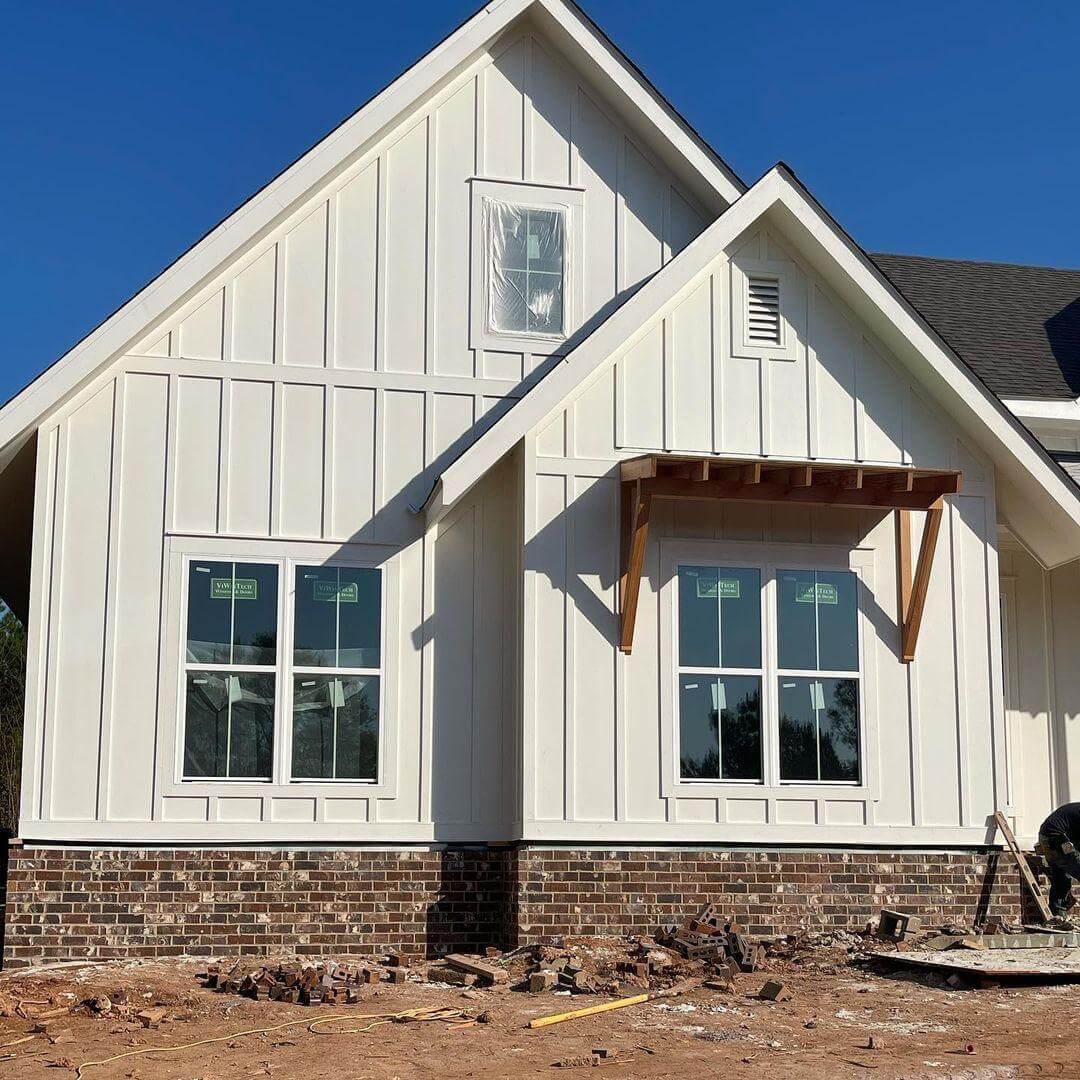
Siding is the face the house shows the street. Board-and-batten, lap and other styles each need different detailing at corners, windows and trim, which is what makes the front of the house look finished.
We install and replace siding, repair sections that can be matched, and finish the trim. The project is the wall itself: the style, the color and the corners.
Siding is the wall you see from the street and the layer that is supposed to shed water before it reaches the sheathing. Board-and-batten, lap, and the trim at the windows are one elevation. A new profile with the old trim left in place looks like two projects.
We repair a section when the material and the faded color can be matched. South and west walls in Houston bleach faster than the north side. A repair is matched to the boards that are on the house now, not to the chip from the year they were installed.
What is included
- Installation and full replacement
- Repair of damaged sections
- Storm-damage restoration
- Trim, sealing and color matching
Built for Houston
The front of the house, not just a wall covering.
A siding project in Houston is usually about how the house looks from the curb: board-and-batten on a newer Cinco Ranch or Woodlands house, or a matched repair on an older Memorial exterior that only needs a section.
We detail corners, soffits and window trim so the new work looks deliberate. South and west walls fade faster here, so a repair is matched to the boards that are on the house now.
Humidity, sun, and the occasional wind-driven rain are the climate load. Fiber cement is common here because it handles moisture better than wood lap and it is not a meal for insects the way untreated wood is. Wood and engineered wood are still options when the elevation wants them, with a finish plan that accepts Houston sun. We talk through that before the order, including paint versus a factory finish.
01
Full replacement
Profile, color and trim are chosen together, then installed so corners, windows and soffits finish cleanly.
02
A section that matches
Sun-faded walls are matched to what is there, not to the original chip. We say when a patch will blend and when the wall needs more.
03
Color on the front
The new boards and the trim are finished together, so the front is one color rather than a patch of a different shade.
In and around
Katy · Cinco Ranch · The Woodlands · Magnolia · Pearland · Sugar Land · Memorial · Spring Branch
Houston
Sun, water behind the wall, and the HOA.
The color is the decision you see. The weather-resistive layer and the sheathing are the decision the house cares about. An HOA may care about both the color and the profile.
Sun on the south and west
Those walls fade first. A patch from a new bundle will not match a ten-year-old south wall even when the product name matches. We say when a section will blend and when the elevation wants more than a patch.
What is behind the siding
Rotten sheathing, a missing wrap, and foam that has turned to powder show up when the boards come off. Storm water that got past the caulk lives there. The new siding goes on a wall that can take it. Hidden rot is extra, and we show you before we cover it back up.
Older walls and newer elevations
A Memorial or Spring Branch house may be getting a section matched to wood or an older fiber cement. A Cinco Ranch or Woodlands elevation is often a full profile change, board-and-batten or a new lap, chosen for the street. The detailing at corners and windows is what makes either one look finished.
Permits and architectural review
A small repair may not need a permit. A full re-side, or work that replaces sheathing, often does, and the city or county depends on the address. HOAs in master-planned communities commonly review siding material and color. That approval is before the order, not after the wall is up.
How it goes
What to expect, step by step.
- 01
Look at the wall
We look at the board style, the sun fade, the corners, and whether the damage is a section or the wall. South and west sides in Houston age faster than the north.
- 02
Match or replace
A repair works when the style and the faded color can be blended. A full wall is the plan when a patch will always show.
- 03
Open what is soft
If the wood under the siding, or the wrap behind it, is wet or rotten, the pretty boards are not the repair. We show you that layer before we cover it again.
- 04
Detail the trim
Corners, windows, doors, and the eave undersides are planned with the boards. Board-and-batten and overlapping rows finish differently at a window.
- 05
Install and finish
The new wall goes on with metal that keeps water out at the joints, and with the paint or factory finish. Color is matched to the boards on the house now, not to a chip from the year it was built.
- 06
Walk the curb
We look at the front from the street and at the joints up close, and we list anything that still needs a pass.
On the job
How the work moves.
01
Consult
We look at the elevation, the fade, the caulk joints, and any soft spots at the trim. You say whether you want a match or a new profile. We say which one the wall will allow.
02
Plan
Profile, color, trim, and the corners are chosen together. If an HOA reviews exteriors, that submission is part of the plan. Flashings at windows and the wrap, if the wall is opening, are specified.
03
Prepare
Plants and walks are protected. The old siding comes off where the scope says so. Sheathing is inspected. Rotten board is replaced before the new skin goes on. We do not side over mush.
04
Build
The new boards are installed with the fastening and the clearance the product wants, including at the roof and at the slab. Window trim, corners, and soffits are detailed so the elevation reads as one.
05
Finish
Caulk, paint or the factory finish, and the touch-up at the cuts close the wall. A field finish is the coating the sun will see. We do not leave raw cuts on a south wall.
06
Walk through
We walk the elevations with you, including the corners and the windows. You see the color in daylight. Anything that needs a joint or a paint touch is listed while we are there.
Signs
Signs the siding is failing.
Boards are soft at the bottom
Swelling at the first course, or a soft spot at a hose bib, is water in the wall. Paint will not dry that out. The board and what is behind it come off.
The south wall does not match the north
Fade is normal. A repair planned from a new sample against a faded wall will look like a patch. We look at the wall in the sun before we promise a blend.
Caulk has pulled away from the windows
That joint is a water path in a wind-driven rain. Sometimes it is a caulk repair. Sometimes the trim and the paper behind it are already wet. We open what we need to open.
You want a different elevation
Lap to board-and-batten, or a new color, is a replacement, not a repair. It is also the project an HOA is most likely to review.
Materials
Fiber cement, wood, and the trim.
The profile is a design choice. The material is a climate choice. Houston sun and humidity are why we talk about both before a bundle is ordered.
Fiber cement
The common Houston siding because it handles moisture and it does not rot the way wood does. It is heavy, it is cut with the right blade, and the paint or the factory color is the finish. We install lap, board-and-batten, and the trim shapes that go with them.
Wood and engineered wood
A different look, and a finish that the sun will consume if it is ignored. Engineered wood and real wood are not the same maintenance. We say which one is specified and how the bottom edge meets the slab so it is not sitting in irrigation.
Trim, corners, and soffits
The wall is finished at the windows, the corners, and the roof edge. New field boards with tired trim still look tired. Those pieces are in the scope when the elevation is the project.
The layer behind
Wrap, flashing tape at the windows, and sound sheathing. If we are opening the wall, that layer is the water management. Siding is the rain screen you see. It is not a substitute for the flashing.
Cost
What siding tends to cost.
A matched repair, one elevation, and a whole-house re-side are different projects. Stories, the number of windows, and rotten sheathing move the number. Color and profile do too, once the HOA and the house agree.
- A matched section repair$800 to $3,000
- One elevation$3,500 to $9,000
- Whole-house re-side, a typical home$14,000 to $32,000
These are typical planning ranges for siding repair or replacement in Greater Houston, not a quote. The size of the job, the materials, and what we find at the house move the number. The price comes from an on-site estimate. Call (713) 909-0034.
How much wall
A section that can be matched is labor and a few boards. One elevation is a visible face. A whole house is every course, corner, and window.
What we find underneath
Sound sheathing is a re-side. Soft sheathing is carpentry before the new boards. We price that when we see it, not as a guess from the curb.
Height and detail
Two stories, a lot of windows, and a complicated gable take longer than a simple one-story ranch. Trim details are part of that time.
Insurance
Storm damage and a faded wall are different.
Wind can take a section of siding off and wet the sheathing. That is worth photographing before it is repaired: the missing boards, the wrap, and any stain inside. Fade, chalking, and a color you are tired of are maintenance, not a storm. We do not write a maintenance repaint as hail.
We photograph the conditions and the scope of the work. We send our estimate to your insurance company for approval and work it out with the adjuster. We are not public adjusters. Your insurer decides coverage and payment.
Signs
Signs the siding is more than paint.
Soft boards at an outdoor faucet, swelling on the lowest row, paint that keeps peeling on the west wall, or a crack that opens at a corner after a storm are reasons to look at the wall, not only the color. Hail and wind bruise fiber cement and knock wood siding loose. A section can be replaced when that style still exists and the fade can be blended. A wall that is tired on every row is a replacement.
If you can see the wood under the siding, or the wall feels soft, water is already behind it. Covering that before the wood is dry and the joints are sealed repeats the rot. We look behind the damage before we order a match.
01
Sunny-side fade
A new board next to ten-year-old south-facing siding will not match the original chip. We match the wall as it is, or we say it needs more than a patch.
02
Lowest boards
The lowest boards see sprinklers, soil, and splash. Rot there is often the ground level, not only a bad board. Where the soil sits is part of the look.
03
Storm hits
Rows the wind lifted, and impact cracks, are photographed. A storm repair and all-new siding are different jobs. The visit says which.
Materials
Rows, board-and-batten, and what is behind them.
Fiber cement and engineered wood are the boards we install most, in rows, board-and-batten, and other common patterns. Fiber cement handles Houston sun and humidity better than untreated wood, and it still needs metal that keeps water out, a gap off the roof and the ground, and the paint or finish the maker expects. James Hardie fiber cement, including HardiePlank lap siding and HardieTrim, is one of those boards. The James Hardie page covers ColorPlus, hail cracks, and replacing rotted wood. Engineered wood needs the same care with water at the ends and the bottom edge. We talk through which pattern fits the house, from a newer Cinco Ranch front to an older Memorial wall that only needs a matched section.
The wrap, and the metal that keeps water out at windows and doors, are the wall you do not see. New siding over a torn wrap will not last. Trim, corners, and the eave undersides are finished with the boards so the front looks like one job. Color is chosen in daylight on that wall. A sample indoors will not match the sun outside.
01
Pattern changes the house
Board-and-batten and row siding are different shadows and different trim. We decide that with the wall, not after the first row is up.
02
Dry gaps
Siding that meets the roof, the soil, or the board tying a deck to the house stays wet. We keep the gaps that let the wall dry.
03
Paint with the boards
Cut ends and the finish on the main open wall go on as the wall goes up, not months later. Raw cuts in this humidity start the next peel.
Cost
A section, a wall, or the whole house.
As a planning range, not a quote, a matched repair of a damaged section often falls around $800 to $3,500 when the style can be found. A full wall or new siding on a typical house often plans around $10,000 to $30,000, more for a complex two-story, many windows, or a premium pattern. Height, gables, and rotten wood under the siding move the number. The price follows the wall, not the size of the roof.
Paint on sound boards is a different project from new siding. If the boards are sound and only the paint has failed, we will say so. Soft boards make paint a waste. The record is photos of the damage and of the finished repair. Your insurer decides coverage. We help with the photos and the work.
01
Wood behind it
Soft plywood or a torn wrap behind the siding is extra work. We open enough to know, and we stop to show you before the job grows.
02
Height
A one-story ranch and a two-story with a tall gable are different access. The price follows the wall, not the neighborhood name.
03
Trim and openings
Every window and door needs metal that keeps water out. More openings take longer, and that time is part of the work.
Houston
Sun, splash, and the permit on the address.
West and south walls here take the sun and the weather. North walls grow mildew in the shade. A plan that treats all four sides as the same age will look wrong in a year. Sprinklers that hit the wall, and soil piled on the lowest row, keep the wall wet no matter how good the siding is. We point that out. A new board will not fix a sprinkler that soaks the wall.
New siding on a whole house in the City of Houston can require a permit. A small repair often does not. Bellaire, West University Place, Sugar Land, Pearland, and the counties that cover much of Katy and The Woodlands are different counters. We check the address. If wind or hail opened the wall, we photograph it before we cover it. Hurricane season is June 1 through November 30. Many of these calls come then, and sun and irrigation still rot the lowest row the rest of the year.
01
With the roof
Where a roof meets a wall, metal that keeps water out has to be right before new siding goes up. If both are in the project, we plan them together.
02
Older walls
Some older Houston houses have extra layers. What is under the siding changes the work. We look, instead of assuming one layer of boards on plywood.
03
Records
Photos of the damage and of the repair are yours to share. Siding you planned is a project, and that is how we describe it.
Questions
Good to know.
Can you repair a section instead of replacing all the siding?
Often, yes. It depends on matching the material and the color after Houston sun has faded what is already on the house. We assess that before we recommend a full replacement.
Can a new siding style change the front of the house?
Yes. Board-and-batten, lap and other styles, plus the trim at corners and windows, change how a Cinco Ranch, Woodlands or Memorial house looks from the curb.
What siding styles do you install?
Board-and-batten, lap and other common styles, including fiber cement and engineered wood. We talk through how each one finishes at corners, windows and the roof overhang, and which one fits the house.
Can siding repairs be documented for insurance?
Yes. We photograph the damage and the completed repair. Your insurer decides coverage.
Do I need to be home for a siding repair?
Someone should walk the wall with us at the start and be reachable. You do not have to watch the whole day. If an HOA color is involved, that decision should be made before we order boards. Dogs and side gates matter on a narrow lot.
How long does siding replacement take?
A few damaged courses are often a day once the material matches. A whole elevation, wet sheathing, or a wall that has to dry takes longer. We tell you after we open a spot. We do not invent a week count from the street.
Does the City of Houston require a permit for new siding?
New siding on a whole house can. A small repair often does not. Bellaire, West University Place, Sugar Land, Pearland, and the counties that cover much of Katy and The Woodlands are different counters. We check the address.
Will an HOA review the siding color?
Often, yes, when the association reviews exteriors. That approval is not the building permit. We wait for a required review before we order a color the street will see. Interior paint is a different question.
Can rain get behind siding that still looks fine?
Yes. Wind-driven rain finds failed flashing, open laps, and a soft bottom row. The paint can look decent while the wall behind it is wet. If an interior wall is staining, tell us. The leak may be the roof, the window, or the siding.
Should siding come off when the roof is replaced?
Only if the wall needs it. A roof and a siding job can share a week and still be two prices. We do not replace a sound wall because the shingles are coming off. If the step flashing is the failure, both trades meet at that joint.
What if the wall behind the siding is wet?
Then we dry it before we close it. Covering wet sheathing traps the water. Houston humidity will not fix that. Photos of the wet wall can go in the record you share with your insurer. We do not decide the claim.
How fast can you cover an open wall?
Call (713) 909-0034 if the storm opened the wall. Board-up is the temporary cover. Siding is the finished wall. We do the cover when it is safe, then talk about the repair. We do not climb or hang boards in lightning.
Can you replace a section instead of the whole wall?
Often, when the style still exists and the sun fade can be blended. If a patch will always show, we say the wall needs more. We decide on the house, not from a photo of the sunny side only.
What is a planning range for siding?
A matched section often falls around $800 to $3,500. A full wall or a typical house often plans around $10,000 to $30,000, more when the wall is tall or the wood behind it is rotten. Those are planning ranges, not a quote.
Fiber cement or engineered wood?
Both can work. Fiber cement is the usual answer for Houston sun and humidity when the style fits the house. We talk through ends, gaps, and finish before anything is ordered.
Do you document storm damage?
Yes. We photograph the damage and the repair. Your insurer decides coverage. We are not public adjusters.
What does siding replacement typically cost in Houston?
A matched section often plans at $800 to $3,000. One elevation often plans at $3,500 to $9,000. A whole-house re-side on a typical one- or two-story house often plans at $14,000 to $32,000. Rotten sheathing, a lot of windows, and a third story move the number. These are typical planning ranges, not a quote.
Can you match siding on a faded south wall?
Sometimes. We compare the new board to the wall in the sun, not to a sample in the shade. If the fade is strong, a patch will show, and we will say that a larger area will look more intentional.
Does new siding need a permit or HOA approval?
A small repair often does not need a permit. A full re-side often does, and the city or county depends on the address. HOAs in Cinco Ranch, The Woodlands, and many master-planned neighborhoods review material and color. We want that answer before we order.
Why not side over the old boards?
Because the sheathing is where the rot is. Covering it hides a wet wall and adds weight and thickness at the windows. We take off what the scope calls for and we look at the wall before the new skin goes on.
Greater Houston
Areas we serve
Siding is scheduled from our office in west Houston (77082). The closest neighborhoods have their own pages. Every community below has a page for this service.
- Meyerland
- Montrose
- Garden Oaks
- Oak Forest
- Kingwood
- Cypress
- Spring
- Humble
- Friendswood
- Tomball
- Missouri City
- Fulshear
- Copperfield
- Rosenberg
- Jersey Village
- Towne Lake
- Bridgeland
- Sienna
- Houston
- Westchase
- Alief
- Energy Corridor
- Katy
- Sugar Land
- Bellaire
- Memorial
- Spring Branch
- The Heights
- River Oaks
- West University
- Galleria Area
- Upper Kirby
- Rice Village
- Medical Center
- Bunker Hill
- Piney Point
- Hunters Creek
- Bear Creek
- Cinco Ranch
- Stafford
- Richmond
- Pearland
- Clear Lake
- Baytown
- Galveston
- Texas City
- The Woodlands
- Magnolia
- Copperfield
- Rosenberg
- Jersey Village
- Towne Lake
- Bridgeland
- Sienna
- Cypress
- Spring
- Missouri City
- Fulshear
- Tomball
- Kingwood
- Humble
- Atascocita
- Friendswood
- League City
- Conroe
- Meyerland
- Montrose
Planning siding?
Serving Houston since 1993. Call (713) 909-0034 to schedule an estimate.