The same crew for a house, an apartment complex, or a storefront.
Elite Restorations does emergency storm and water-damage work for homes, businesses, and apartment complexes across Greater Houston. Property managers, homeowner associations, and building owners can call (713) 909-0034 any time while the emergency is still going. Our office in west Houston (77082) is open Monday through Saturday, 8:00 AM to 6:00 PM, for a visit you schedule.
Elite Restorations helps Houston homeowners, property managers, and building owners document storm and water damage and keep the repair moving. We photograph the damage and do the work you hire. We are not public adjusters. Elite works with your insurance company as your contractor, documents the damage, and negotiates the claim scope with the adjuster. We do not give legal advice, and we cannot promise that a claim will be approved or paid. Your insurer decides coverage. Check your policy.
The disasters we document most often
Flooding
Water that rises from the street, a bayou, or a reservoir is often a different policy from a homeowners or dwelling policy. We photograph where the water entered and how high it went. We write that down as rising water. Check your policy before treating it as a plumbing break.
Hurricanes
After a hurricane we help secure openings, photograph the roof and the wet rooms, and write down the drying and the repair. Hurricane season on the Gulf runs June 1 through November 30. Any notice deadline is in your policy. Ask your insurer what yours says.
Hail
Hail bruises roofs and can crack skylights and light fixtures. We photograph the roof and any water inside before a cover hides the opening, then help with a repair estimate. Your insurer decides what is hail and what is ordinary wear.
Storms and wind
Straight-line wind and severe thunderstorms lift shingles, throw limbs, and drive rain into ceilings from Clear Lake to Katy and The Woodlands. We photograph the opening and the rooms underneath.
Tornadoes
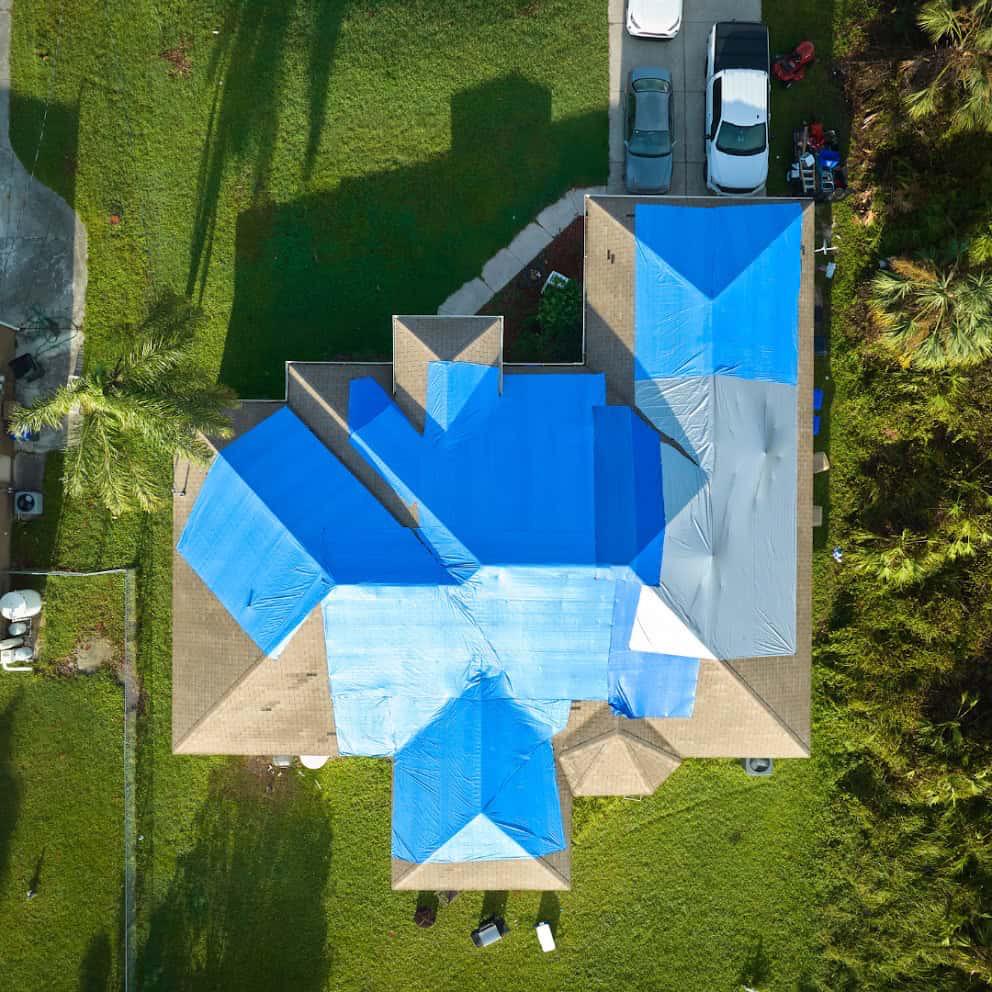
A tornado can take a roof, a wall, or a run of windows. The first work is safety, then photos, then a tarp or board-up when it is safe to do that. We help with the estimate and the repair record. Your insurer decides whether there is a payout.
What we actually do on the claim
Photograph the damage, including wide shots and close shots, before cleanup when that is safe.
Emergency work that limits more damage: tarping a roof, boarding an opening, removing water, and drying. Many policies expect you to limit further damage. That work is not a promise you will be paid back.
Meet the adjuster on site when you want us there, and walk through what we saw of the building.
Prepare a detailed repair estimate for the construction. The estimate is the price of the work. It is not the claim payment.
Stay with the repair and share photos and notes with you, so you can share them with the insurer.
A hard freeze can split attic lines, pipes in exterior walls, and hose bibs on Houston slab homes. The water is often already on the ceiling or the floor before anyone sees the pipe.
What to do first
Shut the main off if you can do it safely. Open a faucet so the line can drain. Stay out of standing water near outlets. Thaw a reachable pipe with warm air, never an open flame.
How we dry and repair
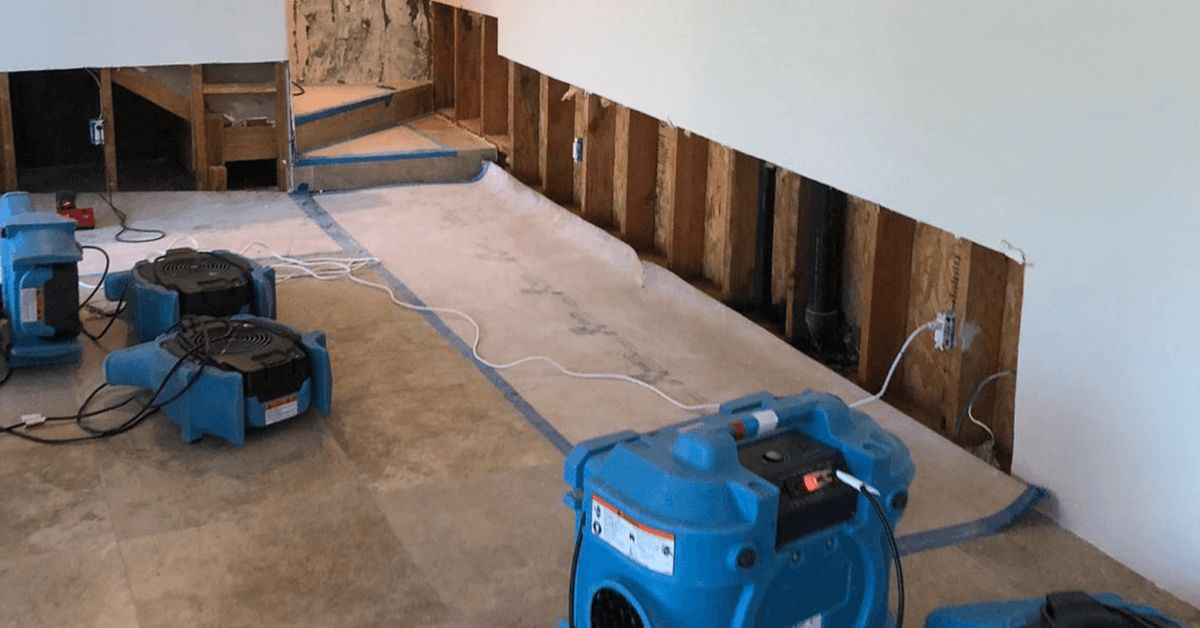
We find where the water traveled in the slab and the walls, remove what is standing, and dry with air movers and dehumidifiers until moisture readings say it is ready to repair.
The claim
Many homeowners policies treat a sudden burst differently from a slow leak. That wording is in your policy, and it is not the same on every policy, so read yours or ask your insurer. We document the break and the wet rooms. Your insurer decides which description fits.
The tank can fail at the pipes on top, at the relief valve and its discharge pipe, or in the tank itself. On a concrete slab the water stays on the floor. A heater in an upstairs closet can soak the ceiling of the room below.
What to do first
Shut the cold-water valve on top of the heater if it will turn. If it will not, shut off the water to the whole house. Turn off the breaker for an electric heater. If you smell gas, or you are not sure which gas valve is which, leave the house and call.
How we dry and repair
We follow the water out of the closet, across the floor or through the ceiling, remove what is standing, and dry the wet walls and floors. A drain pan that overflowed is not the same job as a tank that split open.
The claim
A tank that ruptures in a day and a drip at a fitting that has been staining the closet for months are different facts. Many policies care about that difference. Check your policy. We describe what we see, and your insurer picks the label. We cannot promise payment.
Supply lines, door gaskets, and drain hoses fail under the sink or behind the machine. The cabinet floor and the next room are usually wetter than the kitchen looks.
What to do first
Stop the cycle. Shut the water valve under the sink if you can reach it without standing in water near an outlet. Do not keep running the machine to 'see if it still leaks.'
How we dry and repair
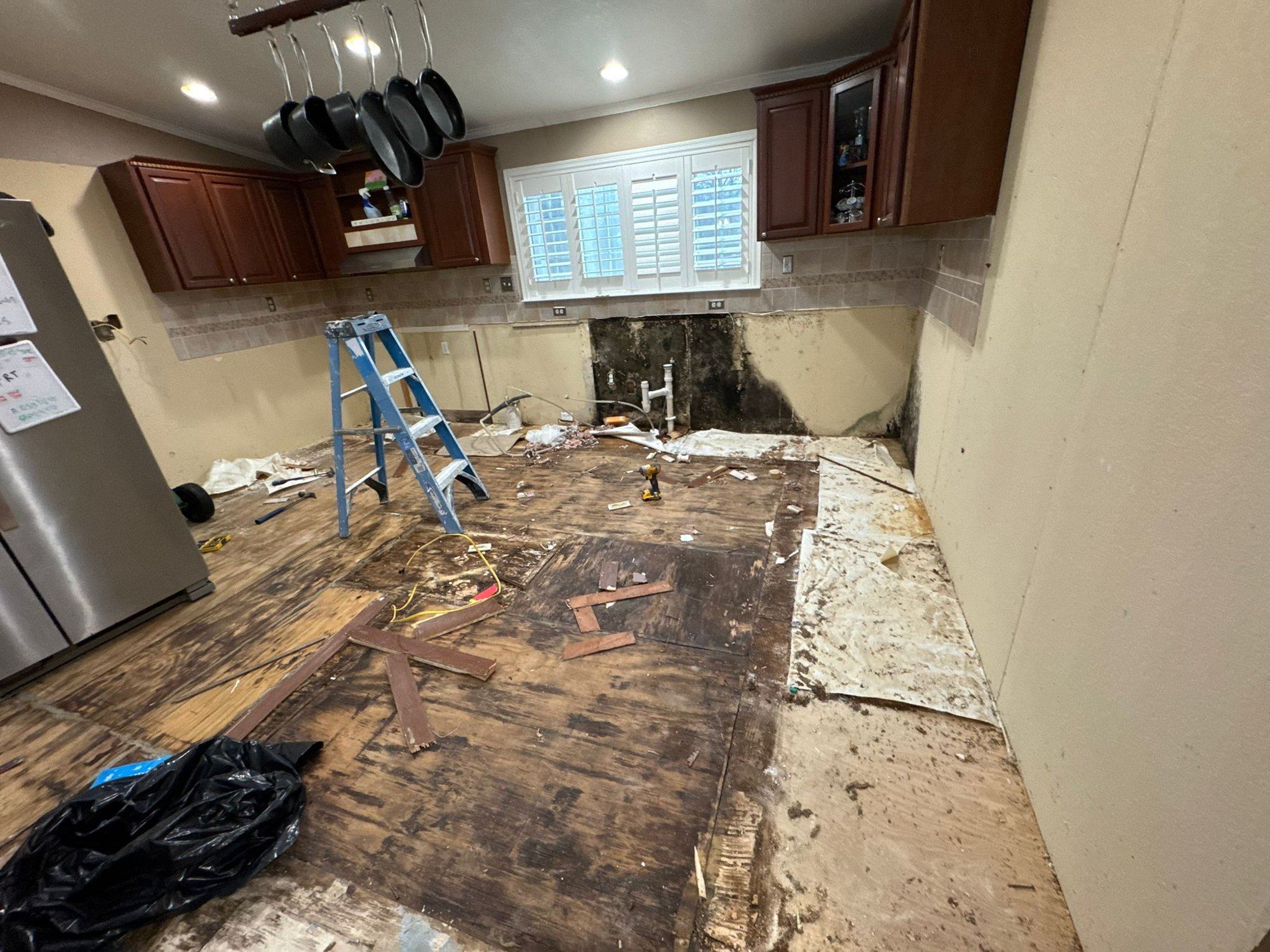
We pull the toe kick and the wet cabinet bottoms as far as the moisture goes, dry the slab and the walls, and rebuild the cabinet parts that swelled. A slow drip and a supply line that blew off are different repairs.
The claim
Policies often treat a sudden supply failure differently from a gasket that has been weeping. Check your policy. We photograph the hose, the cabinet, and the floor. Your insurer decides whether the claim pays for cabinets.
An overflow from a clog, a burst supply, and a slow seep at the wax ring travel differently across a slab. Shut the valve on the wall behind the toilet before the hallway gets it.
What to do first
Close the supply valve on the wall at the toilet, turning it clockwise. If the bowl is still rising from a clog, do not flush again. If the valve will not stop it, shut the main.
How we dry and repair
We find how far water went under the flooring and into the wall behind the toilet, remove it, and dry the slab. An overflow that includes sewage needs a more careful clean than a clean supply-line break.
The claim
A sudden overflow or a supply line that fails is a different history from a wax ring that has been damp for months. Check your policy. We document what we see. Your insurer decides coverage.
Water damage in Houston gets worse by the hour. Humidity slows drying, and standing water in a slab home invites mold and swells anything it touches.
We find where the water went, remove it, dry the structure, clean and disinfect, and then rebuild. Recovery and the repairs stay with one team. We also handle fire and storm-related repairs.
A supply line, a water heater, an appliance, or a roof that opened in a storm puts water on a slab that has nowhere to go but sideways, under the floor and up the drywall. The air outside is often too wet to dry the house for you. We find the wet material, remove the water, and dry the structure before we rebuild it.
Drying and the rebuild stay with one team. We also repair storm and fire damage when that is the opening in front of us. The first question is still where the water went.
What is included
Moisture assessment with meters and thermal imaging
Houston water damage is usually a supply line, an appliance, a roof opening after a storm, or water that came in at ground level. The houses sit in humid air, so a room that looks dry can still hold moisture in the slab, the insulation or the bottom of the drywall.
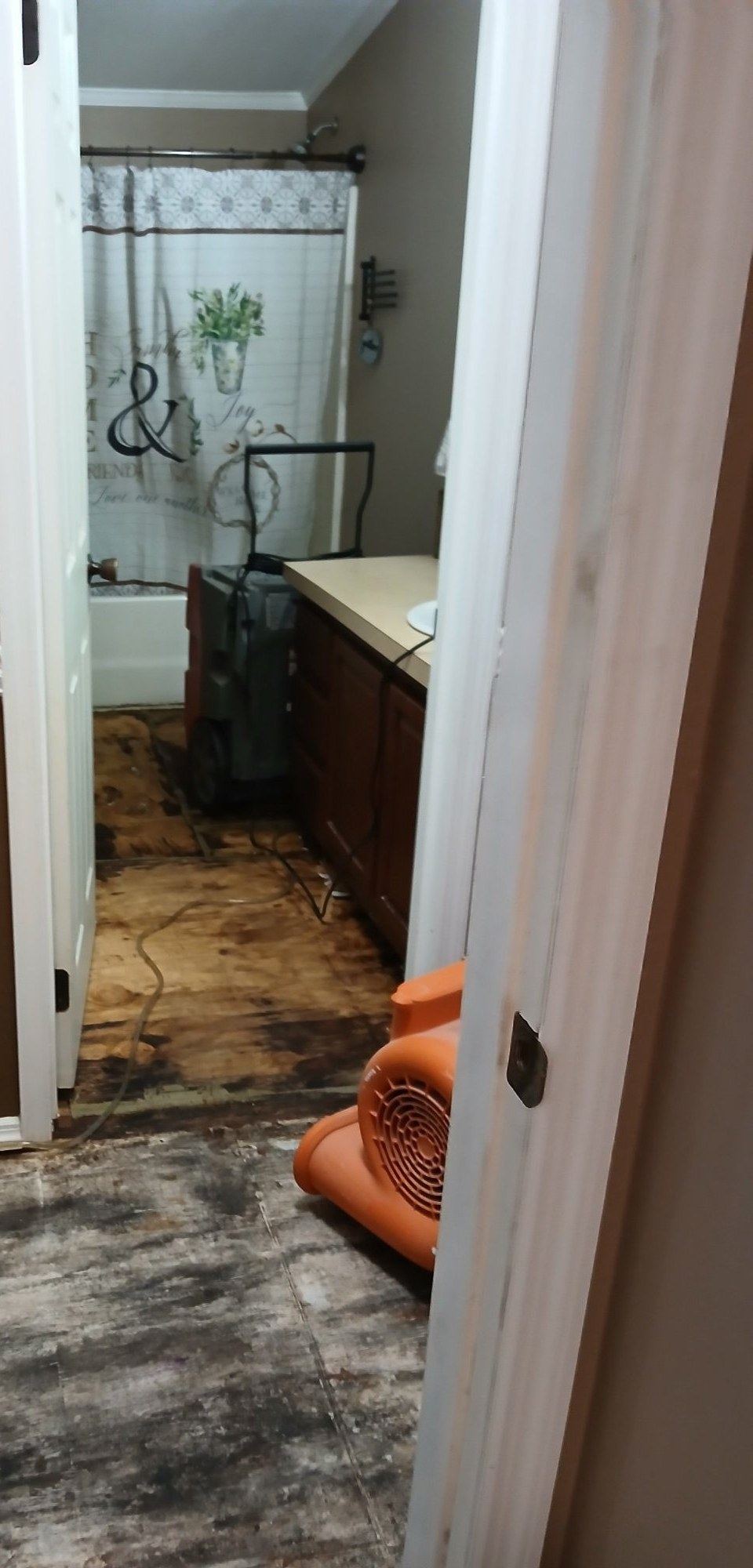
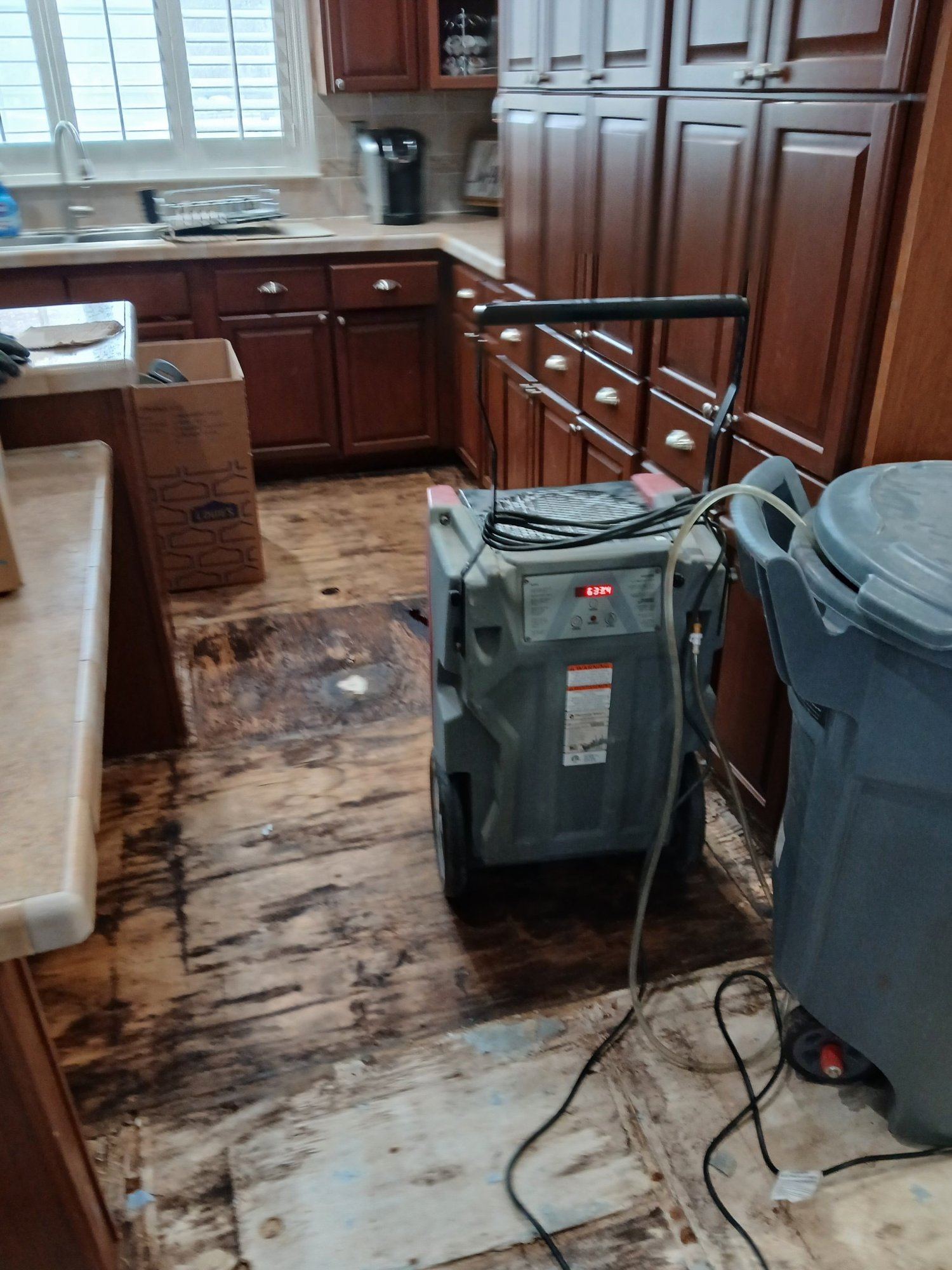
We measure before we remove more than we have to, extract what is standing, and dry with air movers and dehumidifiers. Repairs to drywall, floors and cabinets start when the readings say it is dry.
A one-story slab in Spring Branch or Katy gives water a flat path under the flooring. Cabinet particle board swells at the toe kick. Laminate lifts at the joints. Hardwood cups. In a two-story house the same leak stains the ceiling below, and the stain is not always under the fixture that failed. Many older Heights houses are pier-and-beam, so water can drop into a crawl space and still wick into the floor above. We map it. We do not chase only the stain you can see.
01
Humidity slows drying
Outside air is often too wet to help. Dehumidification is part of the setup, not an optional add-on.
02
Slab and wall cavities
Meters and thermal imaging show water that has traveled past the stain you can see, which is common on Houston slabs.
03
Then the rebuild
Once the structure is dry, the same team repairs drywall, flooring and finishes instead of handing you off.
In and around
Houston · Memorial · Spring Branch · Katy · Pearland · Clear Lake · Bellaire · The Heights
Houston
Humidity, the slab, and how long the water sat.
The neighborhood changes the house. It does not change the order: stop the water, see how far it went, dry what can be dried, and remove what cannot.
Humidity slows everything
Outside air in a Houston summer is often too wet to dry a wall. Opening the windows does not do it. Dehumidifiers and air movers stay until the readings say the structure is dry.
Slab versus crawl space
On a slab, water runs under the floor and wicks into the drywall a few inches up, or a few feet up if it sat. You see paint. The paper on the back of the drywall is what stays wet. In a pier-and-beam bungalow we also look below the floor. Missing the crawl space and drying only the room is how the smell comes back.
Time and mold
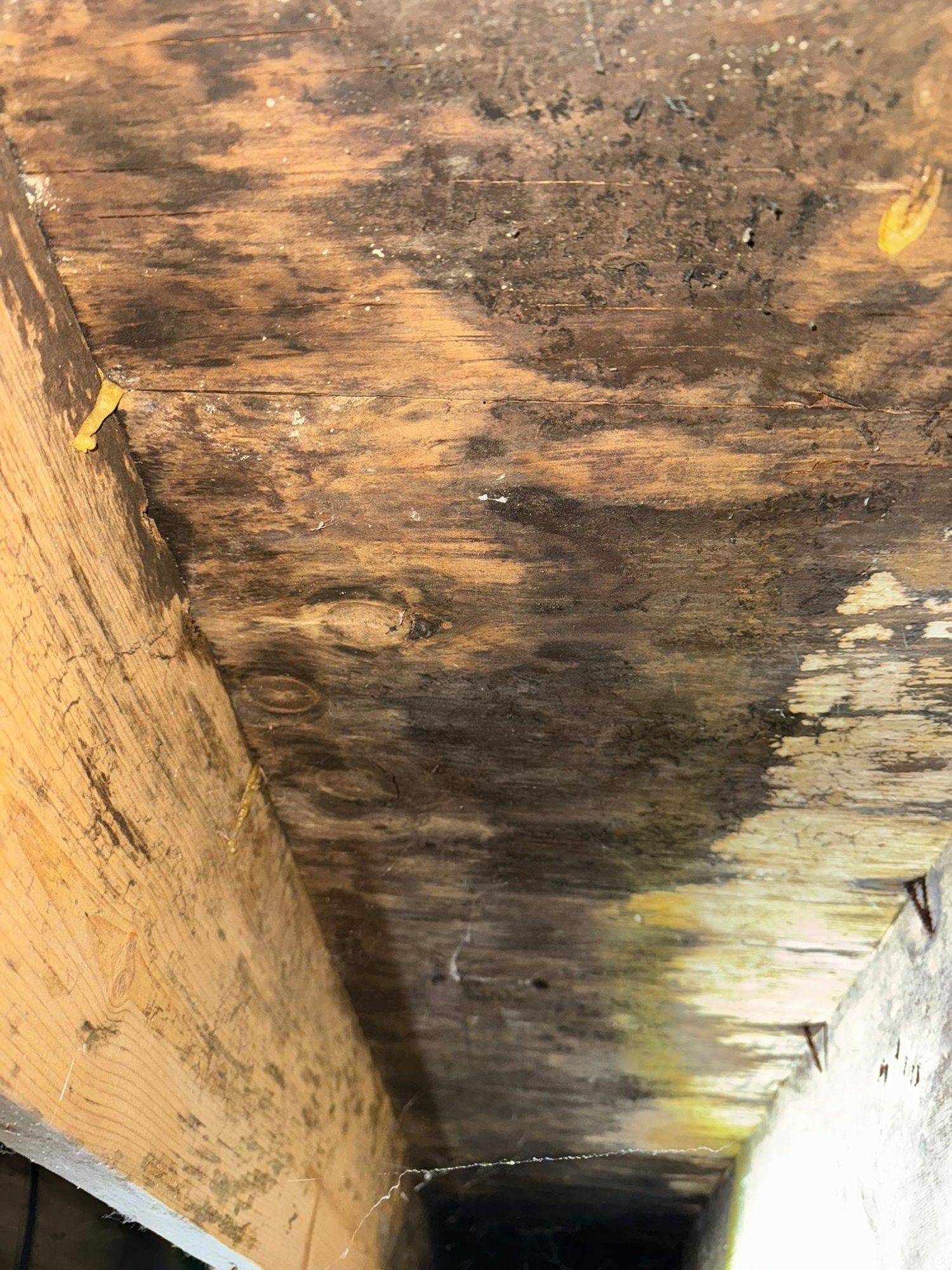
Damp drywall, carpet pad, and insulation do not get a long grace period in this climate. Mold can start on wet materials within a day or two. That is a property of a warm, wet house, not a scare line. We dry and we remove what will not dry. We do not promise a mold-free house. Moisture readings decide what stays.
Storm water and plumbing water
A burst supply line, a roof opening, and water that came in at grade are different losses. Floodwater from rising water is often a different policy from a sudden pipe break, and it is dirtier. We treat the cleaning to the water that was actually there. Your insurer decides which coverage, if any, applies. Hurricane season, June through November, is when the roof openings cluster. Supply lines fail all year.
How it goes
What to expect, step by step.
01
Assess
Moisture meters and thermal imaging map where the water went.
02
Extract
Standing water is removed to stop further spread.
03
Dry
Air movers and dehumidifiers dry the structure and contents.
04
Clean
Affected areas are cleaned, disinfected and treated for odor.
05
Repair
Damaged drywall, flooring and finishes are rebuilt.
06
Verify
A final inspection confirms the structure is dry and safe.
On the job
How the work moves.
01
Assess
Moisture meters and thermal imaging map where the water traveled, past the stain. We look at the slab or the crawl space and at any ceiling below. If it is not safe, we say so before anyone walks through standing water.
02
Extract
Standing water comes out so it stops spreading. Belongings come off the wet floor. What is discarded is photographed first.
03
Dry
Air movers and dehumidifiers run until the readings say the structure is dry. Wet insulation and drywall that will not dry come out so the cavity can dry.
04
Clean
Cleaning follows the water that was in the house. A supply line and water off the ground are not the same job.
05
Repair
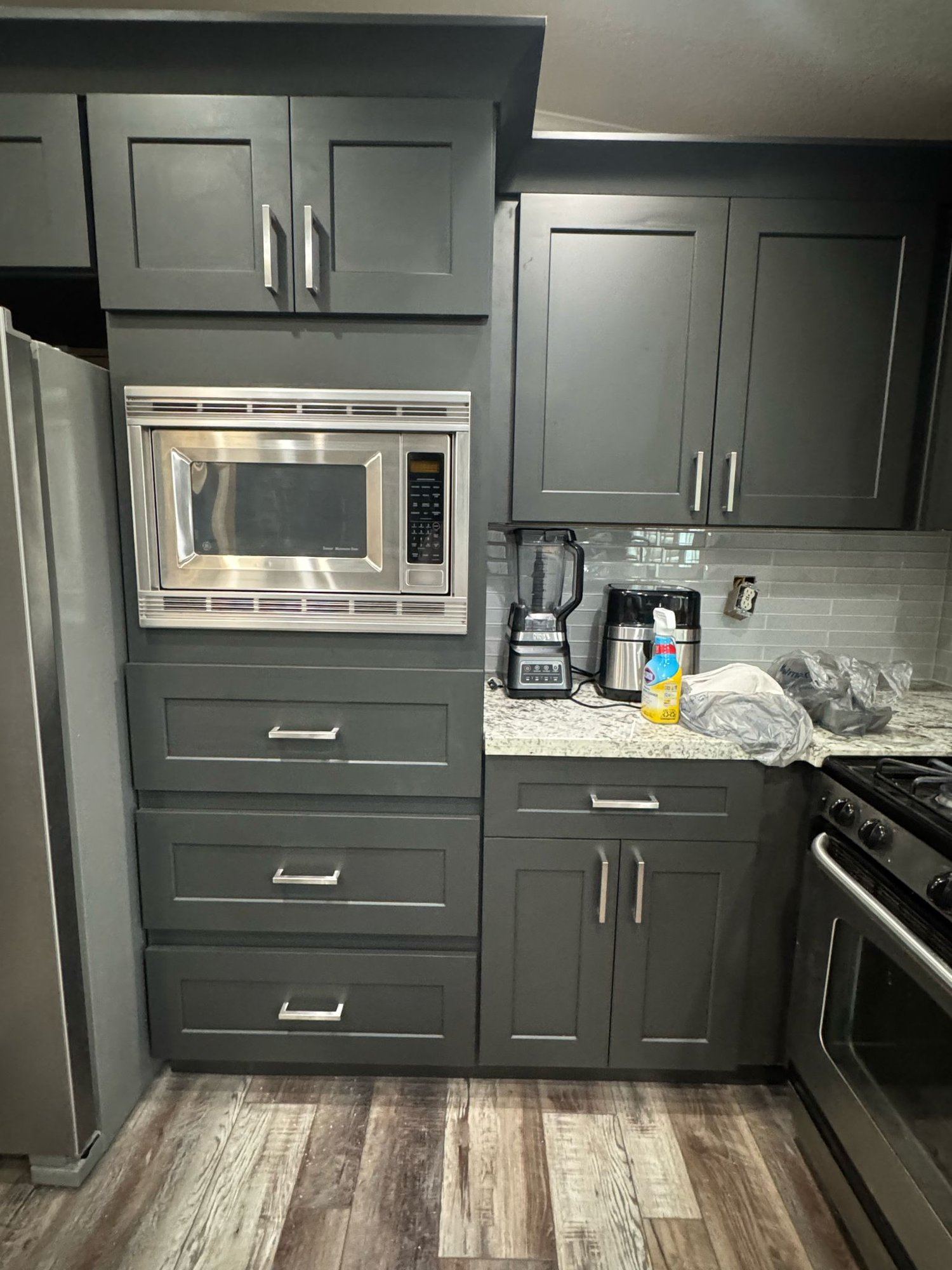
Drywall, flooring, cabinets, and paint are rebuilt once the structure is dry. The same team that dried the house does this work.
06
Verify
We check the readings and walk the repairs with you. The photos of what was wet and what was rebuilt stay with you.
Signs
Signs the water went farther than the stain.
The floor is soft or the boards have cupped
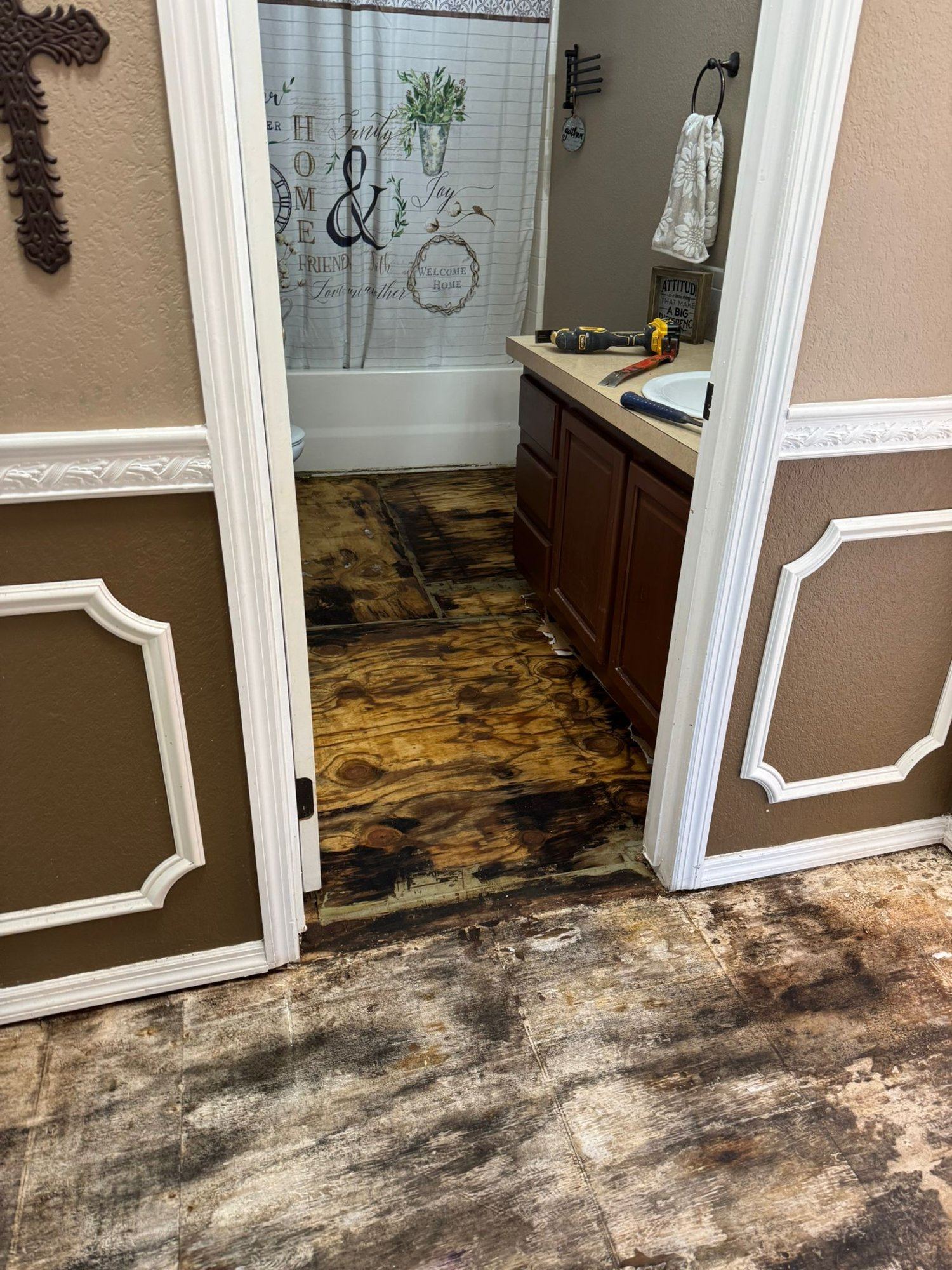
On a slab that often means water under the flooring, not a surface spill. Laminate swells at the joints. Vinyl can hide it until the adhesive fails. We meter the floor before we decide what comes up.
Cabinets are swollen at the toe kick
Particle board at the sink, the dishwasher, or the water heater wicks water and does not return to size. If the box is swollen, the leak is already older than the puddle.
Paint is bubbling low on the wall
The visible line is often below the wet paper inside the wall. Thermal imaging and a meter tell us how high to cut. Patching the paint seals the moisture in.
A stain showed up after a storm
The ceiling stain may be a roof opening, a flashing leak, or an overflowing drain. The attic or the wall is where the water is. The paint is the last step, after the opening is closed and the cavity is dry.
Materials
What gets dried, what gets removed, what gets rebuilt.
The equipment is ordinary and specific: meters, air movers, dehumidifiers. The materials that come out are the ones that will not dry. The materials that go back are the finishes the room had, or the finishes you choose if the loss becomes a remodel.
Drywall and insulation
Wet insulation comes out. Drywall is cut above the wet line. The cavity is dried, then new board, tape, texture, and paint.
Floors
Carpet pad that sat in water does not dry in the middle. Cupped wood may flatten, and it may not. Swollen laminate is usually replaced. We decide from the readings.
Cabinets
A plywood box can sometimes be dried. A swollen particle-board box usually cannot. A kitchen rebuild waits on a dry floor.
Cleaning products for the water you had
A supply-line break and floodwater are not the same cleaning. We match the work to the water that was actually in the house.
Cost
What water restoration tends to cost.
The range is wide because a wet closet and a house that took water through three rooms are not the same loss. How long the water sat, what it was, and whether floors and cabinets have to be rebuilt are the drivers. These are typical planning ranges, not a quote, and not a prediction of what an insurer will pay.
Drying is priced as drying. The rebuild is priced as construction. Combining them into one round number before we have readings is how both numbers go wrong.
One room, extraction, drying, limited drywall$1,800 to $5,000
Several rooms, drying and drywall$5,000 to $14,000
Drying plus flooring and cabinet rebuild$10,000 to $35,000
These are typical planning ranges for water damage restoration in Greater Houston, not a quote. The size of the job, the materials, and what we find at the house move the number. The price comes from an on-site estimate. Call (713) 909-0034.
How far it traveled
One room with wet drywall at the base is the small end. Several rooms, a hallway, and a wet cabinet run are the middle. Floors up and cabinets out are the large end.
How long it sat
A leak found the same day is less demolition than a leak that ran over a weekend in July. Time is moisture in the slab and in the walls.
The rebuild
Drywall and paint are one scope. Flooring, cabinets, and a roof opening that caused the loss are others. We itemize them after the dry-out shows what is left.
Insurance
A record of the loss, not a promise about the policy.
Photograph the water, the source if you can see it safely, and the belongings before they are thrown away. We photograph the conditions, the drying, and the repairs. The insurance photo log is on this site. A sudden pipe break is often treated differently from floodwater or a slow leak, and flood is often a separate policy. We do not know your form.
Mitigation, the work that stops more damage, should not wait on a coverage decision. The rebuild can be scheduled with a clearer scope. Keep those two ideas separate when you talk to the insurer.
We photograph the conditions and the scope of the work. We send our estimate to your insurance company for approval and work it out with the adjuster. We are not public adjusters. Your insurer decides coverage and payment.
Standing water is the obvious case. The quieter cases are the ones Houston houses hide. A ceiling stain can sag. Baseboards can swell on a slab. Wood along an exterior wall can curl up after wind-driven rain. A musty room may never quite dry because the air conditioner is cold and the wall behind it is wet. A supply line can run inside a cabinet, so the floor looks fine and the particle board under the sink does not. If you can hear water and cannot find it, or the floor feels warm in a stripe, call. Paint will not fix a wet wall.
Where the water came from changes the cleaning. It does not change your urgency. A supply-line break is clean water that still wets the structure. A washing-machine drain or a toilet overflow is a different mess. Water from the street, a bayou, or a soaked yard is outside water, and it is different from a burst hose. We name the source we can see, in plain words. Calling it something simpler would describe a different job.
01
It is still running
If you can do it safely, shut the fixture or the main. Stay out of water near outlets, appliances, and the panel. Leave a room if the ceiling is sagging.
02
The ceiling below
Upstairs baths and roofs show up downstairs. A stain on a first-floor ceiling is often the bottom of a wet space inside the ceiling.
03
The slab is hiding it
Water on concrete runs under vinyl, laminate, and cabinets farther than the visible edge. A dry-looking floor can still be wet at the baseboard.
The work
Extract, dry, then rebuild the same rooms.
The sequence is the same whether the source was a hose, a roof, or a storm that pushed water in at ground level. Make the scene safe. Stop more water if that is possible. Map what is wet with meters and a heat camera, because the stain is a poor map. Pull out standing water. Remove materials that cannot be dried cleanly: wet insulation, swollen drywall below the wet line, carpet pad that is soaked, and cabinets that have fallen apart. Then dry what can stay, with fans and dehumidifiers, until the readings support repairs.
Opening a window is a poor drying plan in Houston. For much of the year the outside air is humid enough to add moisture. The dehumidifier is part of the setup. It is how the room actually dries. Readings decide when it is dry. Repairs to drywall, flooring, and finishes start after that, with the same team, so the people who dried the room are the people who rebuild it. Fire-damaged finishes, when that is the loss, follow the same idea: see what is sound, remove what is not, then rebuild.
01
Map before you demolish
Meters and a heat camera show wet spots behind the walls and under the floor, past the stain. We remove what is wet. We open only what the readings justify.
02
Clean what the water was
Supply water, drain water, and water from outside are cleaned differently. We say which one we found. Floodwater needs more than a mop.
03
Contents you care about
Tell us what you want moved or saved. We are there for the structure and the finishes. Some belongings can be saved, and some cannot.
Cost
Why water-damage prices spread so wide.
There is no honest single price for “water damage” in Houston. A supply leak caught in one room, with water removal, drying, and a patch, often plans in a band of about $1,500 to $5,000. A room that loses drywall, flooring, and a stretch of cabinets, with drying around it, often plans about $5,000 to $15,000. A loss that takes several rooms, a kitchen, or a roof opening plus the ceilings under it often plans about $15,000 to $50,000, and a large or dirty loss can be more. Those are planning ranges, not a quote, and not a prediction of what a policy pays.
What moves the number is how far the water traveled, what it was, how long it sat, and what it touched. Wet insulation and drywall below a line are different from a whole kitchen of swollen cabinets. A slab that pulled water under a wood floor is different from a pier-and-beam house where the crawl space also got wet. Emergency tarping, if the roof is the source, is its own job. We price what we can see, and we tell you if opening a wall shows the water went farther.
01
Time wet
A leak found the same day is a smaller repair than one that ran through a weekend. In warm, humid air, wet drywall can start to grow mold within a day or two. That is why we start drying right away.
02
Materials that come out
Insulation, swollen drywall, wet carpet pad, and cabinets that have fallen apart come out and get replaced. Keeping a cabinet that has fallen apart does not save money.
03
The source still has to be fixed
Drying a ceiling while the roof is still open, or a wall while the valve still leaks, only repeats the loss. Fixing the source is part of the plan.
Houston
Humidity, slabs, bungalows, and storms.
Houston’s air is the reason a fan in a window is not a dry-out. Summer humidity stays high. Wet materials in a closed house will not drift back to dry on their own, and outside air often makes the dehumidifier work harder if you leave the house open. We set the equipment for the rooms that are wet and we keep it running until the meters agree. A room that smells better can still be wet where the wall meets the floor.
The foundation changes the path. On a slab, water spreads across concrete and disappears under floors and cabinets. On a pier-and-beam house, more common in older Heights bungalows and many pre-1960 houses, water can drop into the crawl space, wet the layer under the floor from below, and sit in the soil under the house. Both need to be seen. We look in the crawl space, and we do not assume a slab stain is the whole wet area. Storm water at ground level, common when streets and bayous rise, is outside water. We document it that way. Hurricane season is June 1 through November 30, and a roof opening in that season is a tarp plus a dry-out, in that order, when the roof is safe to stand on.
01
Do not paint the stain
Paint on a damp ceiling seals moisture in. The stain is a marker. The wet space behind it is the question.
02
Clay and standing water
The clay soil around the house holds water after a hard rain. A wet exterior wall can be a drainage problem or a roof problem. We look at both before we name the cause.
03
Older plaster
Heights, Bellaire, and West University walls are sometimes plaster over wood strips. They wet differently from modern drywall. We open what the readings justify.
Insurance
What to record, and what we will not decide.
If it is safe, photograph before you throw things away. Take wide shots of each room and close shots of the source, the wet floors, and the ceilings. Keep the burst hose or the failed fitting if you can do that safely. Write down when you noticed the water. Many policies want notice promptly. The deadline and the method are in your policy, so ask the insurer how many days you have. Keep the claim number next to the photos. The insurance photo log on this site is a room-by-room way to start that record yourself.
We add our own photos of the conditions, the moisture, what was removed, and what was rebuilt. You can share them. Your insurer decides coverage. We send our estimate to your insurance company for approval and work through it with the adjuster. We are not public adjusters. Flood from rising water is often a different policy from a homeowners policy. Check your policy. Wind-driven rain through a storm opening is a different situation from a slow drip behind a tub. We describe the facts we can see. Many policies also expect you to limit further damage, which is why tarping a safe roof and starting drying do not wait on an adjuster’s visit. Your insurer decides whether that work is reimbursed.
01
Limit the damage, then the paperwork
Stop more water and start drying when it is safe. The paper trail matters. The wet wall will not wait on it.
02
Separate wind from plumbing
Percentage wind or hail deductibles on many Texas policies are separate from the deductible on a supply-line break. Your policy says which one applies.
03
Reach us
Call (713) 909-0034 and say whether water is still coming in. If you cannot call, use the emergency form. We will call you back as soon as we can. The office address is our office in west Houston (77082).
What should I do first after a leak or flood in Houston?
If it is safe, stop the water and call (713) 909-0034. Stay clear of wet electrical equipment. The sooner drying starts, the less of the house has to be rebuilt.
Can you rebuild after the drying?
Yes. We repair drywall, flooring, cabinetry and finishes once the structure is dry, so you are not hiring a second contractor to finish the job.
How quickly can mold become a concern here?
In Houston humidity, damp materials need drying right away. We track the moisture and keep air movers and dehumidifiers running until the readings say the structure is dry.
Do you help with insurance documentation?
We photograph the rooms and the drying and repair work. Coverage decisions belong to your insurer. Our insurance photo log is available if you want a room-by-room record of your own.
Do I need to be home while the fans are running?
Someone needs to let us in to set the equipment and to check the readings. You do not have to sit beside a fan all day. If you leave, we need a way back in for the daily check. Tell us about pets. The equipment stays until the materials are dry, not until the room looks dry.
How long does drying usually take in Houston?
It depends. A small clean-water leak caught early is a shorter job than a soaked wall, a wet slab, and insulation. Gulf humidity slows it. We do not pull the fans because a calendar said three days. We pull them when the moisture readings support it.
How fast can you respond to water damage in Houston?
Call (713) 909-0034 if water is still spreading or it is near power. We respond quickly, often the same day when crews are available. We tell you the next safe step. We do not promise a drive time. After a hurricane or a citywide freeze, the line is longer. Calling puts the address on it.
Can I stay in the house during the dry-out?
Often, in the rooms that stayed dry, if the power is safe and the wet room can be closed off. Sewage, a sagging ceiling, or water at the breaker panel is a reason to leave. We say which one you have. Children and pets should stay out of the wet rooms.
Should I turn the air conditioner off?
Usually, no. Houston air through an open window adds moisture. The air conditioner and our dehumidifiers do different jobs. We will tell you if a wet ceiling means the system should stay off. Do not run the unit if water reached it.
Will insurance pay for drying before the adjuster arrives?
We cannot say. Many policies expect you to limit more damage, and waiting on a visit while water sits is how the loss grows. That is not a promise of payment. You hire the dry-out. Your insurer decides the claim. We help document what we dried.
Is bayou water the same dry-out as a supply-line leak?
No. Water that rose from a street, a bayou, or a reservoir is flooding. A burst supply is a different source and often a different policy. We write down how the water got in. We do not rename floodwater to make a claim sound simpler. Check your policies.
What should a renter do if the landlord is slow?
Stop the water if you can do it safely, photograph the rooms, and tell the manager in writing. If water is still moving, call us and tell us you rent. We still need someone who can approve work in the unit. We do not enter because a neighbor waved us in.
Should I open the windows to dry the house?
Usually, no. Houston air is often humid enough that an open window adds moisture. Drying here means fans and a dehumidifier, run until the moisture readings support it.
How fast can wet drywall become a mold problem?
In warm conditions, mold can start on wet materials within a day or two. That is why we map moisture and start drying quickly. If something stays wet, mold can still grow.
What is a planning range for water damage?
A contained one-room leak is often about $1,500 to $5,000. A room that needs drywall, flooring, and drying is often about $5,000 to $15,000. Several rooms or a kitchen is often about $15,000 to $50,000 or more. Those are planning ranges, not a quote, and not a claim payment.
Do you handle floodwater the same way as a burst pipe?
No. Supply-line water, drain water, and water that came in from outside are different cleaning problems. We identify what we can see and we clean for that. Floodwater is not a simple leak.
Can you dry a pier-and-beam house?
Yes. The rooms and the crawl space both matter. Water that dropped below the floor is still part of the loss. Slab houses spread water under the finished floor instead. We look at the foundation that is actually there.
What does water damage restoration typically cost in Houston?
One room of extraction, drying, and limited drywall often plans at $1,800 to $5,000. Several rooms with drying and drywall often land at $5,000 to $14,000. Drying plus a flooring and cabinet rebuild often plans at $10,000 to $35,000. These are typical planning ranges, not a quote. The readings and the materials that have to come out set the real number. Insurance may pay some, all, or none of it.
Why can you not just open the windows?
Because the air outside is often wetter than the wall you are trying to dry. Dehumidifiers and air movers, with the wet insulation out of the cavity, are what lower the moisture. A fan by itself moves damp air around.
How is a slab leak different from a leak in a Heights bungalow?
On a slab the water runs under the floor and up the wall, and the drain or the supply line may be in the concrete. In many older Heights houses the floor is over a crawl space, so water can drop below and still wet the wood floor. We look at the structure you have. We do not dry only the stain.
Will mold be gone when the equipment leaves?
We dry the structure and remove materials that will not dry, which is how you stop giving mold a wet place to grow. We do not promise that a house is mold-free, and we do not substitute a logo on a shirt for moisture readings. If the visible growth is a larger scope than the wet drywall, we say so at the visit.
Should I throw the carpet out before you arrive?
If it is safe, stop the water and move what you can off the wet floor. Photograph belongings before you discard them. Standing water and wet pad should not sit while you wait, and a record is easier to make before the pile is on the curb. Call (713) 909-0034 and tell us if water is still coming in.
Do you rebuild after the drying, including the roof if that was the source?
Yes. Drywall, flooring, cabinets, and paint are the rebuild. If a storm opened the roof, tarping and the roof repair are part of stopping more water. One team follows it through. The claim paperwork and the construction stay separate, and your insurer still decides coverage.
Do you help with a flood claim the same way as a homeowners claim?
We help document what happened, and we dry and repair what you hire us to do. Flooding from rising water is often a different policy from a homeowners or dwelling policy. Check your policy or ask your insurer which one applies. A bayou flood stays a flood in our notes. We cannot promise payment.
Can you help after a hurricane?
Yes. Call (713) 909-0034 for an active opening or water inside a house, apartment building, or commercial property. We photograph the damage, tarp or board up when it is safe, and help with the drying and the repair estimate. We are not public adjusters. Your insurer decides the hurricane claim.
How do you help with a hail claim?
We inspect and photograph the roof and any water inside before a tarp covers the opening. Then we can meet the adjuster on site and prepare a repair estimate. Your insurer decides whether the marks are hail or wear. We cannot promise the claim will be approved.
What about wind and severe storms?
We document lifted shingles, broken openings, and wet rooms, and we do the emergency work that limits more damage when it is safe. Helping you during the repair means sharing photos and a clear list of the work. We send our estimate to your insurance company for approval and work through it with the adjuster. We are not public adjusters. We do not give legal advice.
Can you help after a tornado?
When the area is safe to enter, we help with photos, temporary protection, water removal, and a repair estimate for homes, commercial buildings, and apartments. Coverage, deductibles, and payment are your insurer's decision. Check your policy.
Elite Restorations truly came to my rescue during an emergency when all the water pipes burst at my Bryan property. Carlos and Jose showed up quickly, handled everything with urgency and professionalism, and got the situation under control when I needed it most.
I also want to give a special thank you to George, the owner, and his entire team. This level of service is a direct reflection of strong leadership and a company that truly stands behind its work.
This wasn’t my first time working with them either. They’ve completed renovations on multiple properties for me in Galena Park, Bryan, and Marlin, Texas, and every single time the results have been phenomenal. They consistently transform my homes into spaces that feel clean, comfortable, and even have a luxury touch.
To this day, I still receive compliments on how well those homes were renovated, which speaks volumes about their quality and attention to detail.
If you’re looking for a reliable, skilled, and trustworthy team, Elite Restorations is it. I’ll definitely continue using them for my future flip projects.
Catricia Roberson
Water damage and renovations
Google
Good company and good people. They will help you with your water issues. Techs are trained and know what they are doing!
Oscar Meza
Water restoration · June 2025
Google review
Outstanding service from start to finish! When our water heater gave out and flooded our home, we were completely overwhelmed... They handled our entire insurance claim from start to finish, communicating directly with the adjuster and taking a massive weight off our shoulders. Their mitigation crew worked quickly and thoroughly to dry out the house... When it came time for the reconstruction, the craftsmanship blew us away. They didn't just restore our home; they rebuilt everything better than it was before the leak... They turned a stressful disaster into a seamless, positive experience, and we couldn't be happier with the results!
Christopher B.
Water heater flood
Greater Houston
Areas we serve
Water Damage Restoration is scheduled from our office in west Houston (77082). The closest neighborhoods have their own pages. Every community below has a page for this service.